Assistant



 Guaranteed provenanceDirect from the estates
 DeliveryFree standard delivery from £ 250 purchase
 Secure PaymentVisa, American Express, Mastercard...
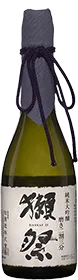
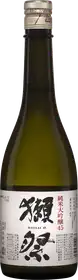
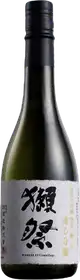
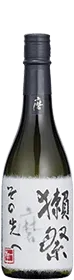
Dassai 39
In-Stock
Let's talk about this product!
A pairing in mind? A question about the vintage? Comparison with another product? Find the answers here...
Description
Tasting notes and characteristics of Dassai 39
Tasting
Appearance
Very clear, almost "crystalline", the hue appears colourless or slightly pale. Displaying remarkable clarity and visual purity, it reveals notable fluidity without any excessive thickness.
Nose
The bouquet is particularly rich, expressive and dominated by fruity notes typical of the ginjo profile. It unveils intense aromas of white and soft-fleshed fruits such as green melon, apple, pear, peach, strawberry and lychee. The whole is elegantly rounded out by touches of white flowers, honey, cream, sweet mint and a subtle nuance of rice flour.
Palate
The structure is described as "medium-light", offering a supple, juicy and almost nectar-like texture. The moderate sweetness (off-dry) is perfectly balanced by a fine, lively acidity. Flavours of green apple, white peach and melon dominate the palate, underpinned by nuances of nougat and jasmine rice. The finish is clean, dry and refreshing, leaving a lingering memory of freshly cut apple with a very slight vegetal astringency.
Food pairings and tasting moments
It is recommended to serve it chilled, between 10 and 13 °C, ideally in a tulip-shaped white wine glass after allowing it to temper for 10 to 15 minutes outside the refrigerator. This sake pairs wonderfully with delicate, lightly salted dishes: sushi, white fish sashimi, seafood, steamed dishes or dried fruits. It also accompanies refined Western cuisines very well, notably French and Italian. It is perfect for a light dinner, as an aperitif for the first glass, or simply enjoyed on its own in a contemplative manner.
Mixology
Being an exceptional product with an extremely sophisticated aromatic profile and a high production cost, we recommend drinking it neat, without artifice. Its use in cocktails would risk masking or diluting its great finesse and the purity of its aromas.
Other characteristics
This sake has an alcohol content of approximately 16%. It is designed to be consumed in its youth in order to preserve the brilliance of its fruity aromas (ideally within the year following its production for pasteurised versions), and requires cold storage, between 5 and 10 °C.
A Japanese sake of great elegance and intense fruitiness
Asahi Shuzo and the excellence of Japanese Dassai sake
The Asahi Shuzo brewery, current owner and exclusive producer of the brand, is located in the Osogoe mountains, within the rural prefecture of Yamaguchi. Faced with the historic decline in consumption, this company made the bold choice to reinvent itself by specialising exclusively in ultra-premium Japanese sake. Dassai sets itself apart with a resolutely modern approach: abandoning the traditional figure of the master brewer (toji) in favour of collaborative teamwork, continuous production across all four seasons and rigorous management through data analysis. This innovative philosophy, combined with the exclusive use of the prestigious Yamada Nishiki rice and an exceptional mastery of local water, has propelled the brewery onto the international stage, a success today symbolised by the opening of the Dassai Blue brewery in the United States.
Dassai 39: the balanced expression of Junmai Daiginjo
Dassai 39 is a flagship cuvée that perfectly embodies the brewery's philosophy of excellence. This sake belongs to the prestigious Junmai Daiginjo category, which implies the total absence of any added distilled alcohol and an extreme demand regarding the selection of raw materials. It is crafted exclusively from Yamada Nishiki rice, a noble variety often crowned "the king of sake rice".
The major technical specificity of this sake lies in its degree of polishing: the rice grain is meticulously milled to retain only 39% of its initial mass. This long and costly operation removes the peripheral proteins and lipids, allowing an exceptional aromatic purity to be achieved and avoiding any cereal heaviness. Fermentation is then carried out with scientific precision, using a specific blend of ginjo yeasts (notably strains 1601, 1401 and 1801) to develop intense aromatic fruit esters.
Offered as a non-vintage product, Dassai 39 is designed to deliver impeccable stylistic consistency from one production to the next. It does not seek prolonged ageing, but rather celebrates the immediate freshness of its aromas.