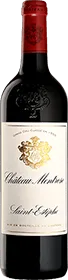
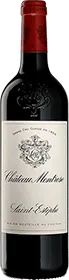
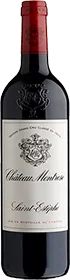
High above the Gironde rises Château Montrose, one of the great historic estates of Saint-Estèphe in northern Bordeaux. From the manor house, a sweeping view opens over the Médoc vineyards, which stretch across gentle hills down to the river. Heather, which blooms in reddish hues in spring, once inspired the name of the estate — “Mont Rose”.
An Icon of Saint-Estèphe
Yet the beauty of the landscape is only part of the story. Even more decisive for the worldwide reputation of Château Montrose is its exceptional terroir, which has produced powerful and long-lived Bordeaux wines for more than two centuries.
Château Montrose: A Deuxième Cru Classé of 1855
Founded in 1815, the estate quickly established itself as one of the leading references of Saint-Estèphe. During the famous Bordeaux Classification of 1855, created for the Paris Universal Exhibition at the request of Napoleon III, Château Montrose was awarded the rank of Deuxième Cru Classé.
“The Latour of Saint-Estèphe”, Robert Parker
Today, the estate is considered one of the most prestigious addresses of the appellation. The American wine critic Robert Parker once described Montrose as the “Latour of Saint-Estèphe” — a comparison that highlights the exceptional quality and ageing potential of these Bordeaux wines.
The Terroir
The Montrose Vineyard
Château Montrose owns around 95 hectares of contiguous vineyards surrounding the château in Saint-Estèphe, Bordeaux. The plots are relatively small — ranging from a few hundred square meters to around two hectares — and each possesses its own soils, vines and microclimatic conditions. This diversity forms the foundation of the precise blending process that shapes the estate’s distinctive style.
The Grape Varieties
The vineyards are planted with approximately 60% Cabernet Sauvignon, 32% Merlot, 6% Cabernet Franc and 2% Petit Verdot. Careful canopy management and yield control help ensure optimal ripening of the grapes.
The harvest lasts around one month and is carried out parcel by parcel with more than 70 harvest workers. Each plot is monitored daily and harvested only when perfect ripeness has been achieved. This precision gives the wines of Château Montrose their structure, balance and remarkable ageing potential.
Ageing Potential
The result is a range of characterful wines from Saint-Estèphe known for their power, precision and exceptional capacity for ageing. Great vintages of Château Montrose can mature for several decades, developing impressive aromatic complexity over time.
Precision and Investment in the Pursuit of Quality
Since the acquisition of the estate by the Bouygues family in 2006, the property has undergone extensive modernization. Today, vineyards and cellars are managed with the utmost precision: each parcel is harvested separately, strictly selected and vinified individually.
State-of-the-art fermentation vats allow for the precise handling of each terroir. Only the finest lots are ultimately selected for the Grand Vin. Despite a relatively high proportion of Cabernet Sauvignon, the wines today show greater elegance and finesse while retaining their characteristic power.
Uncompromising Selection
At Montrose, quality always takes precedence over quantity. If a vintage does not meet expectations, yields are reduced so that only the finest fruit is used. This uncompromising selection is one of the reasons why the wines of the estate regularly rank among the great references of Saint-Estèphe — a reputation also highlighted by critics such as Robert Parker and James Suckling.
La Dame de Montrose – the Second Wine of Château Montrose
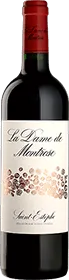
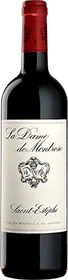
In addition to the Grand Vin, the estate also produces La Dame de Montrose, the château’s second wine. It is crafted with the same care in both vineyard and cellar but contains a slightly higher proportion of Merlot. As a result, it is more approachable and reaches its optimal drinking window earlier, while still reflecting the typical style of Saint-Estèphe and the identity of Château Montrose.