Assistant



 Guaranteed provenanceDirect from the estates
 DeliveryFree standard delivery from £ 250 purchase
 Secure PaymentVisa, American Express, Mastercard...
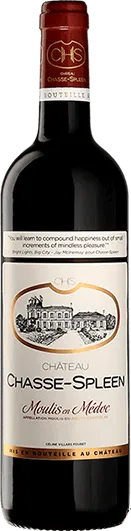
Château Chasse-Spleen 2000
In-Stock
Let's talk about this product!
A pairing in mind? A question about the vintage? Comparison with another product? Find the answers here...
Description
Characteristics and tasting advice for Château Chasse-Spleen 2000
Tasting
Color
The color shows a deep red hue with remarkable brilliance, enhanced by ruby highlights tinged with profound garnet. A fine orange rim at the edge reflects the wine’s natural evolution after more than two decades in bottle. The clarity is absolute, a sign of impeccable winemaking and optimal cellaring conditions.
Nose
The bouquet opens with elegant aromas of fresh plum and cocoa. With aeration, the nose reveals growing complexity, with notes of blackcurrant, blond tobacco, and cedar. Spicy nuances of pink peppercorn and nutmeg complete the aromatic profile, accompanied by earthy and mineral touches. A faint note of fresh mint brings a refreshing dimension to the whole.
Palate
The attack is precise and direct, carried by well-balanced acidity that gives the wine lift and definition. The palate unfolds gradually with breadth and harmony, revealing a sustained fruit character with notes of blackcurrant and fully ripe blackberry. The texture is smooth, creamy, and enveloping. The tannins, remarkably integrated after twenty-six years of aging, show impressive density while retaining a velvety silkiness. The fine, chalky tannic grain creates a satin-like impression. The finish is long and persistent, moving from fruit-driven notes toward more earthy and spicy aromas, with a mineral saline dimension on the back palate. Touches of licorice and cocoa round out this lengthy finish.
Food and wine pairings
This Château Chasse-Spleen 2000 pairs harmoniously with grilled or roasted red meats, such as beef tenderloin or an entrecôte à la bordelaise. It also pairs beautifully with a rack of lamb with herbs de Provence, grilled duck breast, or duck confit. Game dishes—especially venison stew or pheasant with grapes—make for refined pairings. This wine also matches well with aged cheeses such as Comté or Ossau-Iraty.
Serving and cellaring
Château Chasse-Spleen 2000 benefits from decanting one hour before serving to allow its aromas to fully express themselves. It is ideally enjoyed at a temperature between 16 and 18°C. It can be enjoyed now and will continue to evolve favorably until around 2030, or even beyond for bottles stored in optimal conditions.
A full-bodied and delicate Moulis wine
The estate
Located in the Moulis appellation, in the heart of the Médoc, the Château Chasse-Spleen was founded in 1720. Its name, Chasse-Spleen, adopted in 1863, stems from an Anglo-Saxon trend and draws inspiration from Baudelaire. The estate has been managed since 2000 by Céline Villars.
The vineyard
Château Chasse-Spleen benefits from an exceptional terroir located on the Grand Poujeaux rise, an area recognized as one of the finest in the Moulis appellation. The vineyard spans approximately ninety to one hundred and five hectares under vine, making it the largest estate in the appellation. The soils display remarkable diversity, composed mainly of Quaternary Garonne gravels over a limestone base, complemented by clay and sand. This geological mosaic gives the wine its aromatic complexity and finesse.
The vintage
The 2000 vintage is recognized as an outstanding year for Bordeaux. Weather conditions were particularly favorable, allowing the grapes to reach optimal ripeness. The harvest benefited from generous sunshine and ideal conditions, resulting in berries of remarkable generosity and balance. This year produced wines with fine concentration, significant tannic structure, and impressive aging potential.
Winemaking and aging
The Château Chasse-Spleen 2000 harvest was carried out exclusively by hand, allowing for meticulous grape selection. Maceration in temperature-controlled vats lasted around one month, encouraging full extraction of color pigments and tannins while preserving finesse. Fining with egg whites, a traditional French method, ensured crystalline clarity. Traditional aging took place over twelve to eighteen months in oak barrels, 40% of which were new wood renewed each year. This balanced proportion added complexity and structure without allowing the oak to overpower the fruit.
Grape varieties
Cabernet Sauvignon, Merlot and Petit Verdot.