René Gabriel
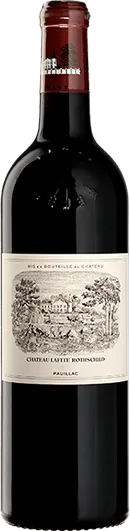
Charles Chevalier, director of the Domaines de Rothschild (Rieussec, Duhart-Milon, Carruades and Lafite-Rothschild): <div style="font-style:italic;color:#990033">There is no logic to the optimal composition of a Lafite. The 1994 was vinified with 99% Cabernet Sauvignon and only 1% Petit Verdot. In 1995 we assembled 70% Cabernet Sauvignon, 23% Merlot and 7% Cabernet Franc. In 1996 there are 83% Cabernet Sauvignon, 8% Merlot, 8% Cabernet Franc and 1% Petit Verdot, because we were forced to wait before harvesting the Cabernet. August and September were very cold, so we took a gamble and waited until October 1st. The last Cabernet grapes were only brought in on October 10th. The essence is very good ripeness—both in terms of acidity and tannins. The 1996 is, by the way, one of the most tannic Lafites ever. But you don’t notice it, because the wine has so much charm</div>. 97: Barrel sample (19/20): finely nuanced bouquet, rock-candy sweetness, black berries, very harmonious, delicate smoky notes, a hint of currants, dried bananas. On the palate, delicate; ripe tannins; vanilla pods; almost lactic; soft acidity; wonderful finish. A Lafite that comes very close to its own 1953 legend and effortlessly keeps pace with the other Premiers. Shortly before bottling (19/20): dark purple with ruby and violet reflections. The bouquet is still generally closed, showing dark precious woods, chestnuts, ripe, almost perfumed Cabernet, dark bitter chocolate, traces of tar and summer truffle—everything very fine and of endless beauty. On the palate, a complex, finely cut sweetness in a delicate, rock-candy-like extract; dark caramel; raspberry seeds and blue elderberry; almost creamy in texture and perfectly balanced; impressive astringency, and even along the sides at the back of the throat the sweetness and ripeness of the tannins comes through. A dream Lafite that will demand a great deal of patience from the true connoisseur and has every chance of becoming a wine of the century. 00: Lafite 1996: Quo Vadis? Followed over two weeks from a half bottle, it was dull and completely fruitless. At a Merryvale blind tasting with nine other world-class wines, participants reported strong cork taint. You could sense the greatness, but the wine was nowhere near clean. In Vienna in June 2000 there was a huge, perfectly organized blind tasting with some of the world’s greatest wines. Thirty international journalists shook their heads when this very Lafite 1996 was poured and again reported cork taint. What on earth happened between the last tasting, just before bottling, and today? And what can wine lovers expect from this wine if they only bought it after it crossed the 100/100-point threshold with Robert Parker? I will only upgrade the wine again when I am absolutely sure it has recovered from its “illness.” During a Lafite vertical tasting in Bad Aussee: the bottle reeked so strongly of dirty cellar, cork and God knows what else that I discreetly moved the glass away from my nose toward the center, to the flower vase, and poured it out there. A full-blown scandal is becoming more and more apparent. Will Robert Parker ever have the courage to stand up to this powerful Premier Grand Cru and side with the cheated wine drinkers? Here, between harvest and bottling, the devil had a hand in it (13/20). 04: Opened an extra half bottle and tracked it over 24 hours, sadly to be sure once again that (at least for the moment) something is off: the bouquet shows oily cleaning rags, Maggi seasoning, Kikkoman soy sauce, and beneath that traces of unclean notes. On the palate, dramatic quality in terms of potential, but also reductive here, with hints of tire and meat trimmings; metallic components on the finish. So one can only hope the wine will recover again by its drinking window and then meet expectations based on the still-published scores of other tasters. (15/20). Initially restrained but profound: truffle note, black berries, cassis and teakwood notes, very refined and layered. On the palate, showing great, subtle class; very noble, regal astringency; aromas remain in the black-berry range; dreamy, tightly knit finish. Here all attributes unite in a wine that can age and perhaps already soon deliver first enjoyment. Finally, after so many disappointing bottles, a contact that conveys what it once promised from the barrel. But unfortunately the negative impressions from very disappointing bottles also remain in memory. Finally again a bottle that delivers what the wine promised from the barrel (20/20). Very dark color, still a bluish shimmer in the garnet, no signs of maturity. Wild Cabernet bouquet: tobacco leaf, musk, chili peppers, profound. On the palate, showing an almost supernatural concentration compared to the classic crus; the wine is likely still blocked and unfinished in its development, but endowed with further potential that calls for bottle age; it comes across quite boisterous. Essence after so many encounters: anything is possible between 15/20 and 19/20. 07: Coburg tasting. Very dark color. Dense, concentrated bouquet, dark roasted notes, dark bread, pumpernickel, prunes. Dried fruits and freshly roasted coffee, highly fine and concentrated, spicy Cabernet notes. On the palate still young and firm, balanced astringency but also terrific ripeness in the brilliantly built tannins, a tightly knit finish with sweet Cabernet notes. After many disappointing bottles (likely due to its stage of evolution), the definitions are now clear because the wine has definitely found its true path: wine of the century. Still too young—but worth a great sin. 11: Very dark color, little development, almost black in the center. Mossy bouquet, bouillon paste, musty, rotten mushrooms—an unforgivable aromatic profile with clear fault notes, which however do not come from cork taint but from chemical problems in production (TCA). On the palate unquestionably great in terms of tannin architecture, but the taste of salty soy sauce and wet tree bark completely disrupts; the fruit is cut off. Even the gigantic potential is of no use. Such a bitter disappointment that one is almost glad for every bottle that leaves Europe for China—thus sparing European wine lovers this bottle bad luck. About half of all Lafite 1996 is brilliant, the rest undrinkable. Exactly like this eagerly awaited magnum: 15/20. 11: Extremely reductive—Bakelite, ripe plums, many roasted notes in the background, a cedar scent like a great Durcu (without devaluing the wine). On the palate unbelievably dense, meaty, with lots of future substance—still nowhere, but very present. Finer than the 1986 and yet somehow its immortal successor. Unfortunately, there are different bottlings of this wine. Some are dull and show a musty haze. We tasted it from two half bottles; both were identical. Identically legendary. Needs at least 20 more years of bottle age. Patience brings wines-of-the-century roses. 1878, 1959, 1996! (20/20). 16: At a blind tasting in Faugères, it was the wine of the evening for me. (20/20). 16: Very dark, little-evolved red. Powerful, deep bouquet, still slightly green but terroir-typical Cabernet traces; underneath it feels reductive. With air exposure it became duller and showed unclean cellar notes. On the palate you sense the Brettamonyces touch. The astringency would be tremendous, the potential immense. But unfortunately, such a wine is extremely difficult to score. And—after 20 years there is no mercy. And—it shows these questionable notes in series, so I have had many bottle encounters going in this highly questionable direction. For me it has squandered all bonuses, and at a very early stage I eliminated almost all my bottles from my private cellar. Sometimes hope doesn’t die last—sometimes it dies much earlier! No score. 21: Medium-dark color, still a fine purple shimmer in the center, no signs of maturity! We did not decant the wine. It evolved beautifully over the following time. Direct bouquet with spice and dark berries, an inky edge, dark precious woods, fine, profound smoky notes. On the second pass it pushes a bit more fruit, in the form of blackberries and a touch of cassis. Very multifaceted. On the palate medium-bodied, in body shape almost more reminiscent of a great Saint-Julien; still clearly astringent, but with settled tannins. A feminine Lafite with grace and elegance. Likely now in its first maturity, and it would certainly benefit from decanting. Somehow it reminded me of a continuation of its own 1953, and it was at the same quality level. Unfortunately the current market price is already around a thousand Swiss francs. (20/20). 22: Incredibly youthful color, inside still almost black with a minimal violet shimmer. The nose shows the black, profound soul of Médoc Cabernet: licorice, cassis, blueberries, black currant. After half an hour I put my pampered nose back to the glass: violet, lilac and other incredibly fresh aromas signal its youth and its ability to animate the observer with a thousand scents. Incredibly deep—baroque, in other words. Yet this Lafite is not (any longer) inaccessible and has developed in recent years timidly but surely. Compact, dense, perfectly established body, finely meaty, fabulously balanced. A perfect essence of a very great, legendary Lafite. Unfortunately there were/are also a few “difficult bottles.” So on this Sunday lunchtime we had great bottle luck. Three hours of decanting. At least! For me, the most perfect Lafite of the day! (20/20).






 Guaranteed provenanceDirect from the estates
 DeliveryFree standard delivery from £ 250 purchase
 Secure PaymentVisa, American Express, Mastercard...