Discover your 100% Free Loyalty Programme | Discover
TrustMark
4.64/5
unchecked wish list
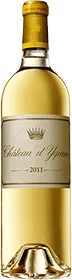
Château d'Yquem 2003
3 pictures
3 pictures

Château d'Yquem 2003

1er cru Superieur - - - White - See details
Parker | 96
J. Robinson | 20
Bettane & Desseauve | 19
Wine Spectator | 97
R. Gabriel | 19
J. Suckling | 98
The Wine Independent | 96
Vinous Neal Martin | 93
out of stock
Out of stock

Would you wish to know when this product is back in stock?

  • Delivery
    DeliveryFree standard delivery from £ 250 purchase
    Right arrow icon
  • Guaranteed provenance
    Guaranteed provenanceWines sourced directly from the producing estates
    Right arrow icon
Marks and reviews

95

/100

Robert Parker

Robert M. Parker, Jr.

No tasting note was given.

97

/100

Wine Spectator

James Molesworth

Squarely on the tropical side of the spectrum, with mango, papaya and pineapple fruit laced with a marmalade note. Long and very caressing through the finish, but never heady or overpowering, as orange pâte de fruit, ginger and singed almond accents lend cut and precision. Shows the heat of the vintage while retaining energy and drive. Impressive. -- Non-blind Yquem vertical (July 2014). Drink now through 2040.

98

/100

James Suckling

A massive Yquem, this has a dense palate that is almost chewy like a red. Full and very sweet, with notes of dried apricot, pineapple, and papaya on the palate. Long, with a vanilla-coconut tart finish. What a wine, voluptuous, sexy, and luscious. 147 grams of RS. Pull the cork after 2015.

19

/20

Jancis Robinson

Jancis Robinson

More complexity on the nose than the Rieussec. Marzipan. Richness. Citrus. Nerve. Really deep flavours with good acidity. Tense. Yes! (JR)

93

/100

Vinous

Neal Martin

The 2003 Yquem was a homogeneous harvest picked in a single trie between 17 and 26 September. It has a rich, opulent nose of crème brûlée, marmalade and melted candle wax. The palate has more to offer than the nose: fine acidity, less closed than the aromatics, with touches of orange rind and mandarin developing over time. This is very commendable given that I do not consider it a great Sauternes vintage. Tasted from an ex-château bottle in London.

97

/100

Jeff Leve

Leve Jeff

The complex nose shoots from the glass with buttered apricots, pineapple, ginger, saffron, candied orange, vanilla, and caramel. The palate matches the perfume with its rich, creamy, layered, opulent display of apricots, honeyed pineapple, spice, vanilla, and ginger that soothes, coats, and lingers on your palate. While it is incredibly rich, it is not heavy or cloying, but it is intense. This will age for decades. Drink from 2023–2053.

19

/20

René Gabriel

This vintage is the last to have been sold under the old system. Meaning, the wine was only shown after it had already spent several months in bottle. It also marks the transition from the old team to the new one. The old crew handled the vinification, the new one did the blending. Pierre Lurton explained to me that the existing blend was tackled again from scratch. When he asked how the final cut was made, he was told: “We simply took the best of the best.” Together with oenologist Denis Dubourdieu, they scrutinized the non-selected lots and found batches that, according to the comments, should have given more play to a wine deemed rich, even somewhat heavy. I tasted the wine with the cellar master on June 21, 2007 at the château. The color is a very deep yellow, even showing slight orange reflections. The bouquet is thick and deep, showing dried apricots, fig tones, raisins, the faintest smoky hints in the background, dried dates, candied honey; despite the likely quite high sweetness, the nose presently feels a bit dry, which in turn accentuates the spicy notes. On the palate, the components are rich, almost—by sweet-wine standards—a bit brawny; the dried fruits, from a baseline aromatic perspective, currently take the upper hand; the acidity manages to support this balancing act, but what is not yet fully resolved is the sum of the wine’s glycerol-like fat needed to counterbalance the power and give the harmony required for a potentially truly great wine. The puzzle therefore still has (some?) missing pieces. Those who drink it now will nevertheless be dazzled by the sum of its individual parts. A true Sauternes—or rather Yquem—connoisseur hopes that this mammoth sweet wine will, in 20 years, deliver on the promise that the two guarantees “Yquem” and “vintage 2003” should be able to fulfill with ease. It can still gain further. For now, for safety’s sake, I would switch to more reliable and, moreover, less expensive vintages. In character, it most closely resembles the 1976. (18/20). 12: At a dinner hosted by Fränzi and Urs Ratschiller, this 2003 d’Yquem sparkled in my glass. I have rarely experienced such nasal schizophrenia. The very delicate nuances of grapefruit and mandarin oil had little chance to fight through the honeyed thicket, but they were there, very subtle, yet somehow refreshing. On the palate, the acidity tried to balance with the almost oily body. That almost succeeded. Plenty of vanillin, yellow fruits (a few days earlier I had eaten a fully ripe mirabelle from a stranger’s tree, and that memory drew the parallel), a hint of quince, nectarines, and again delicate vanilla traces, which I associated more with the scent of vanilla powder used to cook a custard. The heft should slim down a bit with age, but despite the Lurton intervention, this will remain a Sauternes that, by tendency, would also suit a liqueur bottle. A small drop is enough to memorize the taste for minutes. Will it even gain another point in 20 years and land at 20/20? I see full maturity coming even later. But to make that claim, one would need to have tasted and drunk many Yquem. A glance at my Access file shows me that I have been present for 144 vintages of this Sauternes primus inter pares. So I dare to maintain this thesis. (19/20). 17: Magnum. Very pale golden yellow, luminous. The raisiny bouquet comes with demonstrative sweetness, so strong that the presumably generous botrytis currently has difficulty coming through; apricots and mirabelles in confit form, with a nuance of turmeric-like spice along for the ride. On the palate, the almost overloaded spiciness continues nearly seamlessly; the flow feels almost oily and ends with a thick quince jelly finish. A truly great Yquem that, due to its enormous sugar-driven force, currently shows only a portion of what the patient collector will first encounter in around 20 years. It will go down in Yquem history as the “Big Bertha.” (19/20). 21: Already quite dark gold. The first nose suggests freshly cooked, cooled apricot jam. Then come impressions of marzipan, blood oranges, almond meal, light raisins and saffron. The fullness is overflowing and enormously rich. On the palate, this thick nectar almost breaks the mold. It seems to me this is the most opulent Yquem I have ever had on the palate. The flow is oily, almost sticky. Of all that is good, almost too much. Sauternes slim down as they age. So it will be with this Yquem, which also shows affinities with a Trockenbeerenauslese or a Tokaji, at some point. So wait, or eat it with Turkish delight. That’s generally overly sweet as well. (19/20).

19

/20

André Kunz

Silky, dense, finely opulent, creamy bouquet, dried apricots, biscuit, honey. Concentrated, creamy, multi-layered, opulent palate with pronounced sweetness, diverse, dense aromatics, creamy structure, long, full finish. 19/20 drink - 2050

96

/100

The Wine Independent

Lisa Perrotti-Brown

A blend of 70% Semillon and 30% Sauvignon Blanc, with 147 grams per liter of residual sugar, the 2003 Yquem is medium gold-colored. It has a tantalizing nose of baked apricots, pear tart, and ginger cake, leading to wafts of crème brulée, praline, and coriander seed, with a touch of fallen leaves. The palate is concentrated and rich, for sure, but there is wonderful energy and freshness here, offering a decadently opulent finish.

19

/20

Bettane+Desseauve

The nose unfolds with a confidence, precision and purity that would have seemed impossible to achieve in such a short time just ten years ago. The palate is complete, slightly more liqueur-like than in all the previous and subsequent vintages, with a sovereign balance of all elements.

95

/100

Yves Beck

Delicate, pleasant bouquet with many facets. Notes of grapefruit and passion fruit followed by floral nuances. Charming, creamy attack. The wine is already very approachable and clearly reflects the bouquet’s tropical nuances. It has good acidity, providing the necessary freshness and supporting both expression and the persistence of the finish.

94

/100

Jean-Marc Quarin

Jean-Marc Quarin

Golden, bright color. Nose of ripe and candied fruit with a lively touch. A full, energetic palate that becomes juicy, finishing on vanilla notes. Lovely, flavorful length. Very good!

Description

Characteristics and tasting advice for Château d’Yquem 2003

Tasting

Color
Bright and intense color.

Nose
The nose is seduced by its elegant floral nuances of rose.

Palate
The palate reveals itself irresistibly greedy, with a roundness and sweetness perfectly balanced by a just acidity, which supports a remarkable richness in sugars. The aromas of fresh apricot and flowers mingle with a creamy texture with vanilla accents, inviting a deeper sensory exploration.

A great Sauternes wine imbued with elegance and complexity

The property
South of Bordeaux, the Château d'Yquem is one of the most beautiful references of the Sauternes appellation. This legendary Premier Cru Classé Supérieur enjoys an exceptional terroir and gives birth to sweet wines sought after worldwide.

The vineyard
The Château d’Yquem is an extraordinary place, nestled in the heart of the hills of the Sauternes appellation, rich in a hundred hectares of vineyards planted on a mosaic of gravelly-sandy terroirs. If the estate extends over 113 hectares of vines, the vineyard in production spreads over about 100 hectares, benefiting from warm and dry soils on the surface with large gravels. The clayey soils, on the other hand, allow for good water reserves.

The vintage
June 2003 set a heat record at Yquem, with an average temperature of 23.3 °C, far exceeding the normal 18.3 °C. This vegetative advance of 2 to 3 weeks, observed from mid-May flowering, already announced early harvests. However, these conditions seemed almost moderate compared to the exceptional temperatures of August, where the maximums averaged 32.5 °C, well beyond the previous records of 1933 and 1947. Despite this extreme heat, rainfall remained in line with seasonal norms, avoiding any water stress to the vine. These climatic excesses accelerated the maturity of the grape: as early as August 8, the sauvignons displayed a potential degree of more than 13.5°, with a well-preserved acidity, an advance of 3 to 4 weeks on a classic cycle. A vintage marked by the power of the climate and the exceptional precocity of the harvest.

Blend
Sémillon and sauvignon blanc.

Château d'Yquem 2003
2.0.0