Assistant



 Guaranteed provenanceDirect from the estates
 DeliveryFree standard delivery from £ 250 purchase
 Secure PaymentVisa, American Express, Mastercard...

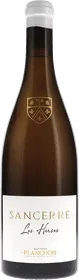
Matthias Planchon : Le Fort 2022
Stock currently at the producing estate – Will ship after 14 October 2026
Let's talk about this product!
A pairing in mind? A question about the vintage? Comparison with another product? Find the answers here...
Description
Tasting characteristics and tips for Le Fort 2022 from Domaine Matthias Planchon
Tasting
Nose
The nose reveals intense aromas of very ripe red fruit.
Palate
On the palate, this wine seduces with its smooth, flowing character. The tannins are present, fine and elegant, giving the whole a sense of structure and refinement.
Food pairings
This red Sancerre pairs just as well with aperitif moments as it does with meat, cheese, or even desserts.
Serving and cellaring
To fully enjoy Le Fort 2022, it is recommended to serve it at a temperature between 16 and 18°C. Bottling is carried out at the estate, taking lunar cycles into account.
An elegant, flowing red Sancerre from Domaine Matthias Planchon
The estate
Based in Sancerre in the Centre-Loire region, Domaine Matthias Planchon farms 5 hectares of vines according to organic and biodynamic principles, certified by Demeter and Biodyvin. Matthias Planchon, whose line of winemakers has been recorded in the archives of Sancerre since 1573, refined his expertise with Alphonse Mellot before taking over the family estate. The estate stands out for its innovative approach, favoring extended aging in barrels and ceramic, followed by refinement in stainless-steel tanks, with attention to lunar and solar cycles.
The vineyard
Le Fort is a lieu-dit in Sancerre covering 0.50 hectares on clay-limestone soils. The terroir is made up of Buzançais limestone and layered Lower Kimmeridgian limestone, characterized by very stony limestone soils that give the wine structure and minerality. The vines are 60 years old on average.
Winemaking and aging
Le Fort 2022 is harvested by hand. The grapes are fully destemmed before undergoing a 2- to 3-day cold maceration prior to fermentation. Maceration lasts around 3 weeks, with 1 to 2 punch-downs during active fermentation, complemented by gentle pump-overs to moisten the cap. After draining off the skins, the pomace is pressed at low pressure and the free-run and press wines are blended. Malolactic fermentation takes place half in ceramic tanks and half in 228-liter barrels. Aging lasts one year on fine lees in barrels and ceramic, followed by about another year of maturation in a stainless-steel tank.
Grape variety
This Loire wine is 100% Pinot Noir.