René Gabriel
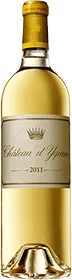
The first sip suggested a potential wine of the century. But at the next tasting it turned out very differently: I stared in disbelief at the label after it was revealed during an extensive Yquem blind tasting. Then I looked again at my notes: 15/20 points! And all the other tasters were shaking their heads too, because this legendary ’86 showed extraordinarily poorly. When I drank it for the first time in spring with Jean-Pierre Moueix, I was preaching at the lunch table that this vintage could, for me, be the successor to the ’37—and now this: idiosyncratic bouquet; sultanas, reminiscent of a Rhine Riesling. Vegetal palate, fine bitterness, chlorinated, salty. As a closing remark I had noted: simple sweetness without class. It must have been a bad bottle! In any case, the last word has not yet been said. No rating for this bottle!
1996, tasted from three different bottles: all were cloyingly sweet and far from having any claim to be a wine of the century. After so many bad bottles, I must strongly advise all Yquem lovers against buying the ’86. Perhaps it will recover one day and become what it initially promised. Perhaps it will experience a renaissance like the ’82 did back then. Even though I am, by nature, an optimist, I currently lack the faith.
97: Now I know what the problem is with this great Yquem in itself: it is too “cold”. While the ’83, ’88 and ’89 smell almost explosively of dried fruits, this ’86 comes across like a cold Chablis: on the nose there are limestone and magnesium traces and a subtle, almost discreet sweetness. This also prevents the botrytis note, which is evident in the acid profile, from revealing itself. Over the next five—perhaps even ten—years, you won’t be able to feel much affection for it. But it will gain and, at its peak, will be a great Yquem with a Barsac-like profile.
Yet just a few months later, another 16/20-point bottle: perfumed bouquet; multi-faceted with pleasant sweetness. Juicy palate, honeydew melon, good length. Other tasters rated it rather higher. Sadly, one has to assume that, as with the ’67 and ’75, there are different bottles! But what is very positive among all these assumptions: in twenty years this wine has what it takes to become a wine of the century.
99: Drunk to crown an unforgettable evening at Christine and Christoph Rageth’s in Dietikon, and “laid to rest” to guitar sounds: medium yellow with first golden reflections. Gently toasty bouquet, scented of vanilla and apricots; the botrytis seems hidden in the background. Fat, opulent palate; the aromas are still closed and the wine even shows a certain tannic astringency. Shortly after release from the Château, the signs for a truly, truly great Yquem vintage were there. Then difficult years followed, and often somewhat hard-to-read bottlings. And then I had the absolute aha moment of a stunning Sauternes. Immense potential is certainly assured. Unfortunately, there seem to be different bottle qualities. The best: 19/20.
06: The deepest color of all Sauternes tasted. Cool bouquet, orange blossom, apricots as if freshly cooked, peppery and rich, compact sweetness, very perfumed at the core, white pepper, candied citron; still feels very young and fresh, finishes with enormous fruit drive and sweetness and shows tremendous ageing potential. A great Yquem that somehow blends its Sauternes typicity with a certain finesse reminiscent of a truly great Barsac.
08: Drunk twice on the same day! First at lunch at Cos d’Estournel with Jean Guillaume Prâts, and then in the evening with François Xavier Borie at Grand Puy Lacoste. The en primeur business does have its good sides! (19/20).
16: Bright orange-gold. Brilliant bouquet: delicate citrus notes and a multi-layered botrytis note, orange blossom, fresh cooled apricot jam; very balanced. On the palate, finely full, poised, flowing homogeneously, persistent on the finish. One of the great Yquems, though not among the spectacular ones. Or perhaps that will still come, because unlike all the other 1986 Sauternes, there is further potential here. Overall, a finesse package not to be underestimated. Superior to all competitors. (19/20).
19: Bright yellow-gold, not as developed yet (the Rieussec ’86 in the same series was much darker!). After tasting quite a lot of 1986s again and again, this is the only wine where you find botrytis from the very first second—though not very intensely. The bouquet is expansive and multi-faceted. There are fresh berries, very ripe fruits, and also dried fruits—apricots, peach, mirabelle plums and orange. Restrained and tender at the same time. On the palate, sublime yet full; the acidity is integrated, the flow is мягk, with an almost silky texture. The finish is focused, intense and very long. It is not an absolutely great Yquem. However, the last word has not yet been spoken, as the drinking window is only just beginning. And because it is a) a Sauternes and b) an Yquem, I was counting on a guarantee of pleasure almost up to the year 2100. (19/20).
21: At the dinner at Lynch-Bages. The wine was served blind. I also guessed 1988 and speculated either Suduiraut or Yquem. I had had Yquem 1988 a few days earlier. But it was the 1986. With a half-matured golden color and delicate greenish reflections. The nose full of mirabelle plums, green plums and saffron. The botrytis (still) doesn’t really push through, so the pleasantly sweet wine comes across as vegetal, apricot-like and molasses-like at the same time. On the palate, however, it shows considerably more grandeur. (19/20)





 Guaranteed provenanceDirect from the estates
 DeliveryFree standard delivery from £ 250 purchase
 Secure PaymentVisa, American Express, Mastercard...