Assistant



 Guaranteed provenanceDirect from the estates
 DeliveryFree standard delivery from £ 250 purchase
 Secure PaymentVisa, American Express, Mastercard...

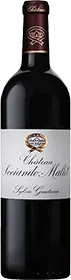
Château Sociando-Mallet 2002
Only 2 available
In-Stock
Let's talk about this product!
A pairing in mind? A question about the vintage? Comparison with another product? Find the answers here...
Description
Characteristics and Tasting Notes for Château Sociando-Mallet 2002
Tasting Notes
Appearance
This wine reveals an extremely dark and saturated hue, oscillating between deep purple and violet, testifying to a remarkable concentration.
Nose
The aromatic bouquet proves serious and complex, dominated by aromas of ripe black fruits such as blackcurrant and plum. It is enriched with mineral notes, graphite, melted tar, as well as subtle touches of dried herbs and damp earth.
Palate
Powerful and virile, the palate unfolds an imposing structure supported by abundant tannins. Austere in its youth, the concentrated matter has now softened to offer a beautiful fruity intensity and a long persistence on mineral and tertiary nuances.
Food and Wine Pairing
This red wine pairs wonderfully with roasted or grilled red meats, such as a rib of beef or a hanger steak. It also enhances game in sauce, traditional dishes from the Southwest such as lamprey à la bordelaise or black pudding, as well as hard-pressed cheeses.
Serving and Cellaring
To fully appreciate this 2002 vintage, it is recommended to serve it at a temperature of around 16 to 17°C, opening it one to two hours before tasting with a possible light decanting. Built for a very long evolution, this wine has reached its peak of maturity and can be enjoyed now, while still being able to be kept until around 2030.
The Power and Structure of a Haut-Médoc Wine
The Estate
The history of the estate's noble lands dates back to 1633, but the true creation of Château Sociando-Mallet came about in 1831, upon the marriage uniting the Sociando and Mallet families. Located in the Bordeaux region, this property experienced a spectacular revival starting in 1969 thanks to the visionary Jean Gautreau. Now run by his daughter, Sylvie Gautreau, this unclassified estate spans 110 hectares, including 85 hectares of vines. It stands as an essential reference, producing wines of a quality often compared to that of the greatest classified growths.
The Vineyard
Majestically overlooking the Gironde estuary, the vineyard flourishes on the Baleyron hillock, within the Haut-Médoc appellation. This exceptional terroir, facing west and southwest, benefits from a microclimate tempered by the river that protects the vines from climatic extremes. The vines, averaging 30 to 35 years old, are planted on Günz gravel mounds resting on a deep clay-limestone subsoil. The estate is managed using sustainable farming practices, with exclusively manual harvesting.
The Vintage
The year 2002 was characterized by classic weather conditions, offering less sunshine than other years. Nevertheless, this vintage proved particularly favorable for the late-ripening grape varieties of the Left Bank. Thanks to the regulating microclimate of the estuary and the optimal drainage of the gravel soils, the grapes were able to benefit from a prolonged growing season, thus reaching an excellent level of ripeness despite generally more challenging weather.
Winemaking and Ageing
The winemaking process begins with a traditional vinification, carried out on a plot-by-plot basis in temperature-controlled stainless steel vats to extract the matter with precision. The wine then undergoes an extended ageing period of 12 to 18 months in French oak barrels, with a high proportion of new wood reaching up to 70%. To preserve its full texture and depth, the wine is bottled without systematic filtration.
Grape Varieties
This wine comes from a blend dominated by Cabernet Sauvignon (approximately 55%), complemented by Merlot (approximately 40%) and a touch of Cabernet Franc (approximately 5%).