Assistant



 Guaranteed provenanceDirect from the estates
 DeliveryFree standard delivery from £ 250 purchase
 Secure PaymentVisa, American Express, Mastercard...
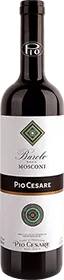
Pio Cesare : Barolo "Mosconi" 2018
Only 2 available
In-Stock
Let's talk about this product!
A pairing in mind? A question about the vintage? Comparison with another product? Find the answers here...
Description
Tasting characteristics and advice for Pio Cesare Barolo "Mosconi" 2018
Tasting
Color
The color reveals a deep, concentrated garnet hue, reflecting the phenolic intensity and aging potential of this wine.
Nose
The bouquet is initially reserved, requiring aeration to fully unfold its complexity. After a few moments, the nose opens onto elegant floral notes of rose and violet, characteristic of the limestone soils of the Mosconi vineyard. Aromas of dried red fruits, notably cherry and raspberry, mingle with darker notes of blackberry and plum, typical of Monforte d'Alba barolos. The mineral dimension expresses itself with intensity through nuances of graphite, iron, and crushed stone. With aeration, tertiary notes of underbrush, truffle, dried herbs, and sweet spices such as licorice enrich the bouquet. Hints of tar, smoke, incense, and tobacco complete this complex aromatic palette.
Palate
On the palate, this barolo presents itself as a well-structured wine, built for aging, while retaining the elegance and classic proportions of the 2018 vintage. The attack is precise and compact rather than explosive, revealing a refined tannic texture. The mid-palate shows excellent concentration with intense flavors of cherry and plum interlaced with mineral, herbal, licorice, and spice notes. The tannic structure is a remarkable strength: the tannins are fine, firm, and silky, with a polished grain that provides structure without aggressiveness. The balance between tannin intensity and vibrant acidity is exemplary, with no one element dominating the other. The finish stretches out with fine length, favoring savory and mineral characteristics rather than sweetness or oak influence. The final notes evoke minerals, herbs, licorice, iron, and that elegant dryness that defines the classic expression of barolo.
Food and wine pairings
Barolo "Mosconi" 2018 pairs perfectly with hearty dishes, especially traditional specialties from Piedmont. It goes beautifully with red meats and game such as wild boar, venison, or duck. Pasta dishes with meat-based sauces find an ideal partner in it, particularly brasato al barolo, this beef slowly braised with carrots, celery, and barolo. Wild boar agnolotti, served with brown butter and mushrooms, also create a remarkable harmony. Dishes featuring wild mushrooms and truffle naturally resonate with the wine’s earthy and mineral aromas. For cheese, opt for aged hard cheeses such as Parmigiano-Reggiano, Pecorino Toscano, or Piedmontese specialties such as Castelmagno and Toma. Piedmontese cured meats, including crudo di cuneo, lardo, and bresaola d'Ossola, also make an excellent match.
Serving and cellaring
Barolo "Mosconi" 2018 can be enjoyed now but will continue to develop positively for 20 to 30 years. Experts suggest a drinking window extending through 2040, or even beyond around 2050. Decanting is recommended to allow the wine to open up and fully express its aromatic complexity.
A Monforte d'Alba barolo combining classic elegance and exceptional aging potential
The estate
Founded in 1881 by Cesare Pio, the Pio Cesare House is among the most prestigious historic producers in Piedmont. Established in the heart of Alba in 18th-century cellars built on ancient Roman walls, the estate has remained family-owned for five generations. Today, Federica Boffa Pio, who took the helm in 2021 at the age of 23 alongside her cousin Cesare Benvenuto, carries on the family legacy with determination. The estate farms around 80 hectares of vineyards spread across the most prestigious areas of Barolo and Barbaresco. Pio Cesare stands out for its balanced approach, combining respect for Piedmontese traditions with thoughtful innovations, producing wines that express the purity of the fruit and the distinctiveness of each terroir.
The vineyard
The Mosconi vineyard, acquired in December 2014 by Pio Boffa, is a 10-hectare parcel located in the commune of Monforte d'Alba, marking the family’s first foothold in this area of Barolo. Situated between 350 and 400 meters in altitude with southwest and southeast exposures, the vineyard rests on complex soils of limestone and marl, rich in clay. These Helvetian-era geological formations, characterized by a gray-blue tone alternating with siliceous sandstones and calcium carbonate deposits, give the wines a pronounced structure and remarkable aging potential. The nebbiolo vines are very old, some planted in 1947 and others in 1971, delivering low yields and exceptional fruit concentration. This geographic position in the eastern part of Monforte d'Alba produces wines marked by cherry-driven fruit intensity while maintaining an impressive structure.
The vintage
The 2018 vintage in Piedmont stood out for its classic character. The long, wet winter, lasting through March with above-average rainfall and cool temperatures, helped replenish soil water reserves after the 2017 season. Spring continued with abundant rains from late May to early June, creating fungal pressure that required attentive vineyard management. Summer unfolded in a classic pattern with progressively warmer temperatures and a fine growing period extending through the traditional harvest dates. This gradual ripening, in contrast to recent warmer vintages, allowed nebbiolo grapes to mature slowly and develop a refined acid balance that defines the character of the 2018 vintage. Nebbiolo harvesting took place during the second half of October, under optimal conditions. The grapes reached good sugar levels with excellent acid retention and ideal phenolic ripeness, ensuring wines of great purity with beautifully elevated fruit, expressed through elegance, tension, and depth.
Vinification and aging
Vinification of Barolo "Mosconi" 2018 follows the house’s traditional protocols, with fermentations in stainless-steel tanks and extended macerations of around 25 to 30 days on the skins to extract the phenolic material necessary for structure and aging potential. After fermentation, the wine is aged for approximately 24 months in large French and Eastern European oak casks, with a limited proportion of French barriques to bring additional complexity and structure. The House has moderated the use of new oak compared with practices in the 1990s, favoring the expression of pure fruit and terroir. After oak aging, the wine benefits from extended bottle aging before release. The wine is neither fined nor filtered, thereby preserving its complexity and natural character.
Grape variety
100% nebbiolo