In Meursault, Domaine Pierre Girardin goes against the conventions of Burgundy. Its founder, Pierre-Vincent Girardin, sums it up in a phrase: “do the opposite.” In classic Burgundy, he explains, whites are lightly extracted and then aged to gain richness, whereas reds macerate for weeks to gain structure. At his estate, the reds undergo no extraction at all. The whites are picked early to preserve their acidity and dry extract (what remains of the wine once the water and alcohol have evaporated). He even says he is looking for whites that are more tannic than his reds.
An estate founded in 2016 on family vines
Domaine Pierre Girardin was founded in 2016 by Pierre-Vincent Girardin, then aged 18, and its first vintage was 2017. He presents himself as the thirteenth generation of a family of winegrowers established in Santenay since the 17th century. When his father Vincent Girardin sold his house in 2012, name included, he kept around 4.5 hectares of vines. It is on these that the son built his own estate, which grew to 13 hectares in 2025 through purchases and leases in Meursault, Puligny-Montrachet and Chassagne-Montrachet. Grapes purchased under contract complete the harvest.
High canopies, August harvests, large barrels: where the style comes from
Vines trained higher since 2019
At Pierre Girardin, going against the grain starts in the vineyard. In 2019, the team changed the way the vineyard is trained so that the vines could grow taller, which the winemaker considers the true turning point for the estate. This approach, he explains, allows him to harvest earlier than his neighbours while keeping the grapes' acidity. Over its first eight vintages, six harvests began in August. The vines have been farmed organically since 2018.
What the 456-litre barrel changes
Pierre Girardin's whites are fermented and aged in custom-made 456-litre barrels, notably from the François Frères cooperage, rather than in the Burgundian pièce of 228 litres. With double the volume, the surface area of wood per litre of wine decreases. The oak therefore stays in the background, even in new barrels, and the wine retains its freshness. After nine to fifteen months in barrel, ageing is completed in tank.
No extraction for the reds
Pierre Girardin's reds are vinified without punching down, pumping over or rack-and-return, the three techniques usually used to draw colour and tannins from the skins. The grapes infuse rather than macerate. The wine is then aged in pièces and bottled without fining or filtration, on a date chosen according to the moon. The estate seeks reds with a floral perfume, without a pronounced tannic frame.
1,400 bottles per cuvée on average
Pierre Girardin divides its production by lieu-dit, the named parcels of the land register, whose names he puts on the label even for village appellation wines. A cuvée from the estate averages 1,400 bottles, distributed across 85 countries in 2025: about fifteen bottles per wine and per country, according to the winemaker's calculation. This parcel-by-parcel approach explains the breadth of a range that runs from the Chardonnay “Éclat de Calcaire” to Montrachet.
Where to start in the range, and how high to go
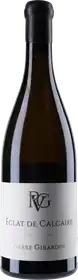
Éclat de Calcaire as a starting point
The Pierre Girardin range is built on four tiers: an entry-level white, lieu-dit village wines, premiers crus and grands crus. The Chardonnay “Éclat de Calcaire” is that entry-level white, sold as Vin de France and made largely from Meursault parcels. Also aged in 456-litre barrels, it gives the measure of the house style: a precise white with notes of citrus and smoke, running into a chalky finish.
Reading the Meursault wines by their place on the slope
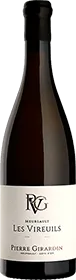
The Meursault wines of Pierre Girardin are best chosen first by their location. “Les Narvaux” comes from one of the highest parcels in the village, above Les Genevrières, on white marls. “Les Vireuils” sits at the top of the slope, towards Auxey-Duresses, and “Les Grands Charrons” adjoins the premier cru Les Gouttes d'Or. At the next level up, the selection offers two premiers crus, “Les Perrières” and “Les Gouttes d'Or”. Further north, the Beaune Premier Cru “Les Grandes Epenotes” is a white born just a few metres from the Pommard Premier Cru Les Epenots.
Puligny and Chassagne: from village to premier cru
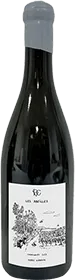
In Puligny-Montrachet, the range climbs in clear steps. The Puligny-Montrachet Village blends two lieux-dits from the commune. “Le Trézin” and “Les Folatières” remain village appellation wines but each comes from a specific parcel, the latter enclosed within the premier cru of the same name. Above them, “La Garenne” is a premier cru from the upper slope with thin soils, and “Les Pucelles” is a neighbour of Bâtard-Montrachet. In Chassagne-Montrachet, the estate produces both colours, from village to premier cru level: “Les Chenevottes” and “Les Grandes Ruchottes” in white, “Clos Saint-Jean” in red, and “Clos de la Maltroie” in both.
From Chassagne to Échezeaux: the ladder of reds
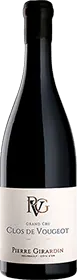
Pierre Girardin's reds follow the same progression. The red Chassagne-Montrachet wines form the entry level. Next come the Nuits-Saint-Georges Premier Cru “Les Damodes”, the Pommard Premier Cru “Les Grands Epenots” and the Vosne-Romanée wines, including “La Colombière”, made from 60- to 80-year-old vines. At the top stand the Corton Grand Cru “Les Perrières” and the Clos de Vougeot. The Échezeaux, a grand cru from the commune of Flagey-Échezeaux, completes this final tier.
Corton-Charlemagne and Montrachet at the summit
Pierre Girardin's white grands crus come from the two poles of the Côte de Beaune: the hill of Corton to the north and Montrachet to the south. The Corton-Charlemagne “La Croix” comes from a section of the hill that the estate vinifies separately. The Montrachet is made from vines located on both sides of the boundary between Puligny and Chassagne, the two communes that share this grand cru.
The Jura wines of Pierre Girardin, vinified in Meursault
Old Jura vines trained to 2.20 metres
Beyond the Côte-d'Or, the range has included wines from the Jura since the 2022 vintage. Unable to expand as he wished in Burgundy, and in search of fresher whites, Pierre-Vincent Girardin bought vines there that are 70 to 100 years old. They are trained to 2.20 metres, one metre higher than in Burgundy, and are no longer trimmed (trimming consists of shortening the shoots in summer). The foliage thus shades the bunches and preserves their freshness, he explains. The project is far from a sideline: the winemaker sees the future of his estate in it.
Chardonnay or Savagnin
The selection brings together the two white grape varieties of the Jura. Savagnin, the grape behind vin jaune, can be tasted in “Le Noyer” Savagnin, from the blue marls of Rotalier, and in “Le Chataignier” Savagnin. Chardonnay is represented by “Les Saugettes” and “Les Abeilles”, the most natural entry point for a lover of Meursault whites.
Why the label says Vin de France
Pierre Girardin's Jura wines are sold as Vin de France. Because they are vinified in the Meursault cellar, and therefore outside their production zone, they cannot claim any Jura appellation: the label states the grape variety and the vintage, but neither Arbois nor Côtes du Jura. It is a regulatory constraint, not a declassification.
When to open the estate's whites and reds
Whites: five to twenty-five years of ageing
Whether they come from Meursault or the Jura, Pierre Girardin's whites age according to their rank. According to the estate's technical sheets, Éclat de Calcaire is best drunk within five years and the Jura wines within about ten. The lieu-dit Meursault wines such as “Les Narvaux” aim for eight to twelve years, “Les Perrières” and “Les Pucelles” for ten to twenty, and the Corton-Charlemagne for up to twenty-five.
Reds: the decanter before the cellar
Vinified without extraction, Pierre Girardin's reds can be opened young after decanting, as the estate recommends. The Pommard Premier Cru “Les Grands Epenots” is said to keep for up to fourteen years.